Globe® Pulsed Field System
UX DESIGN
UI DESIGN
Background
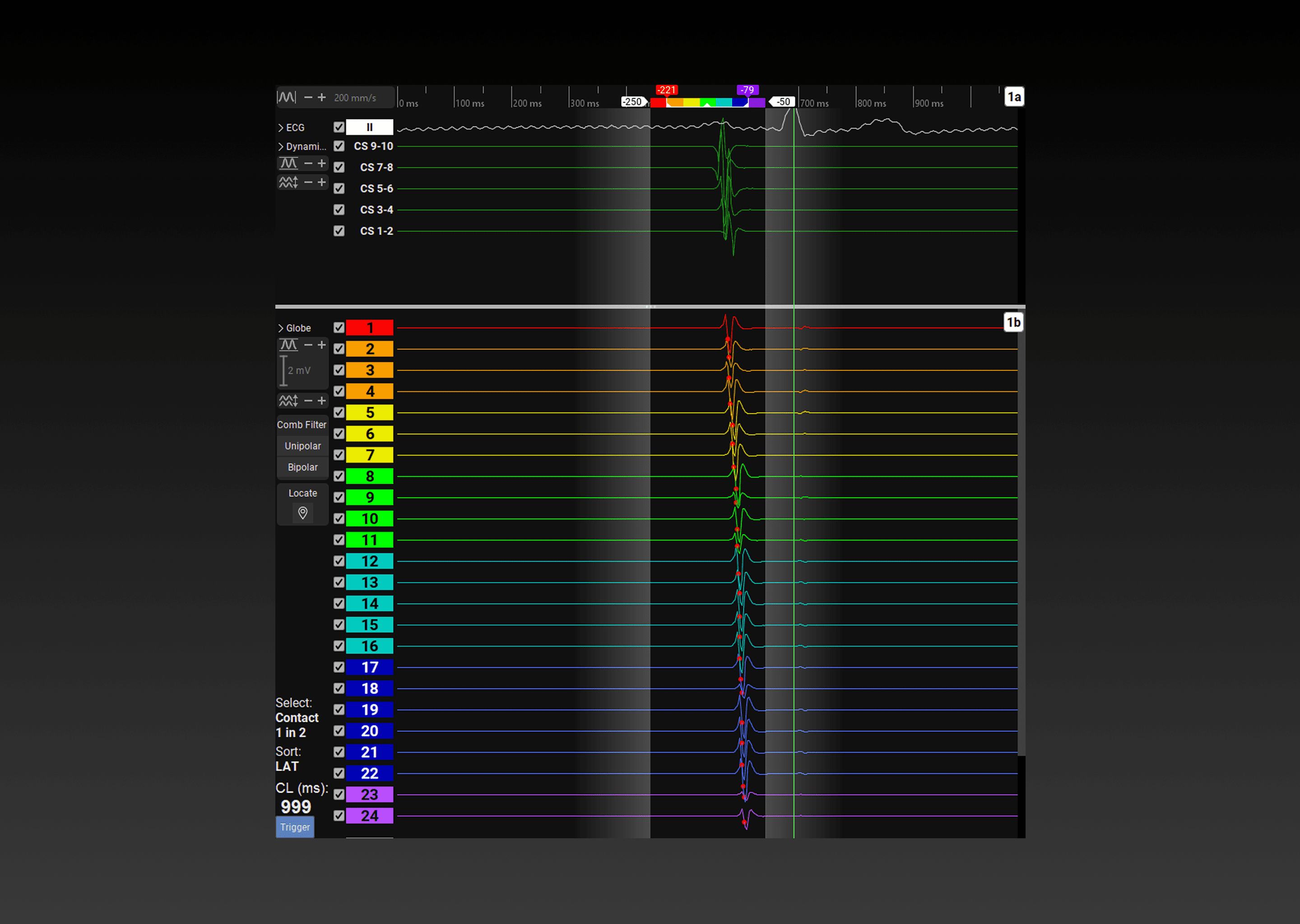
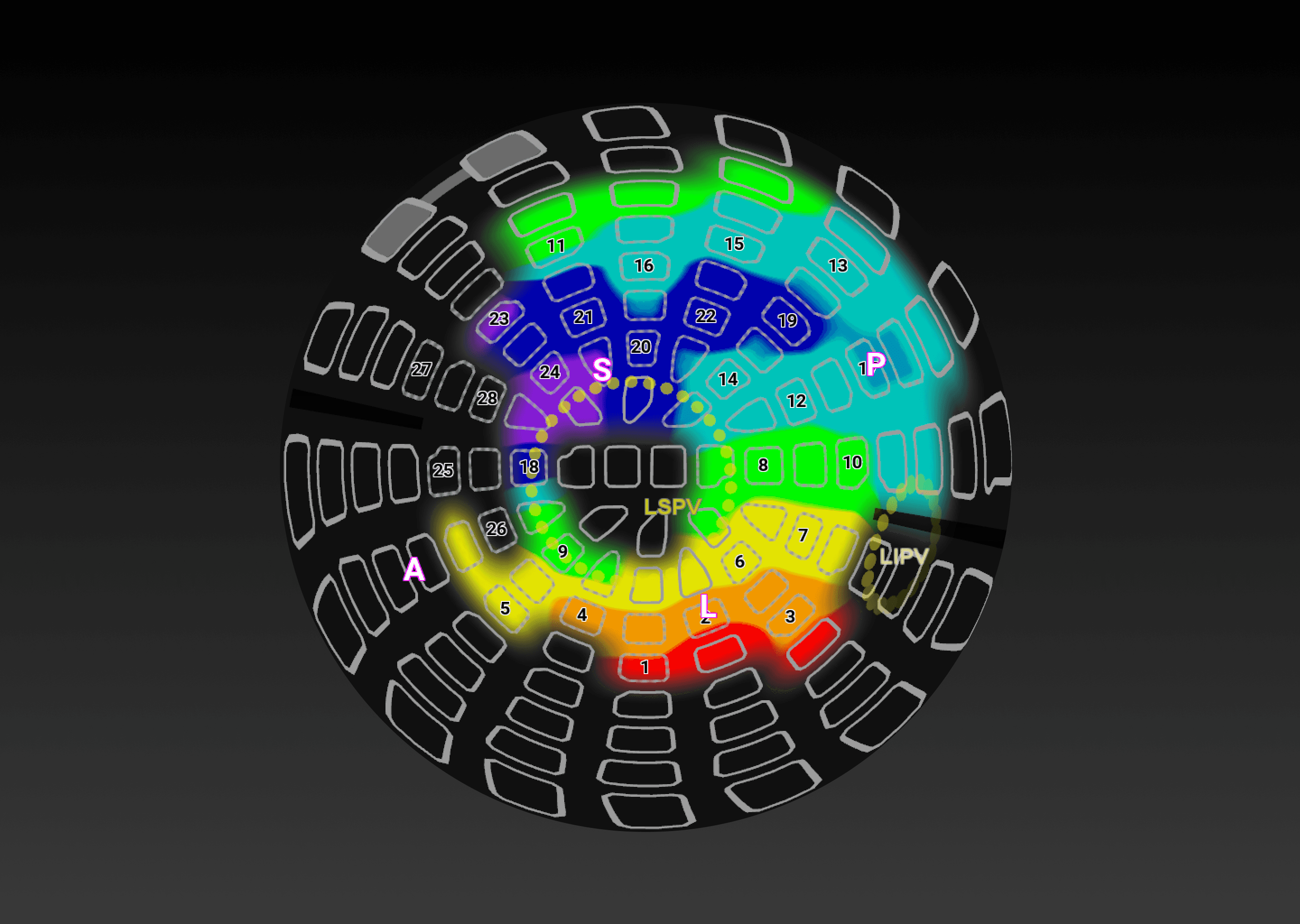
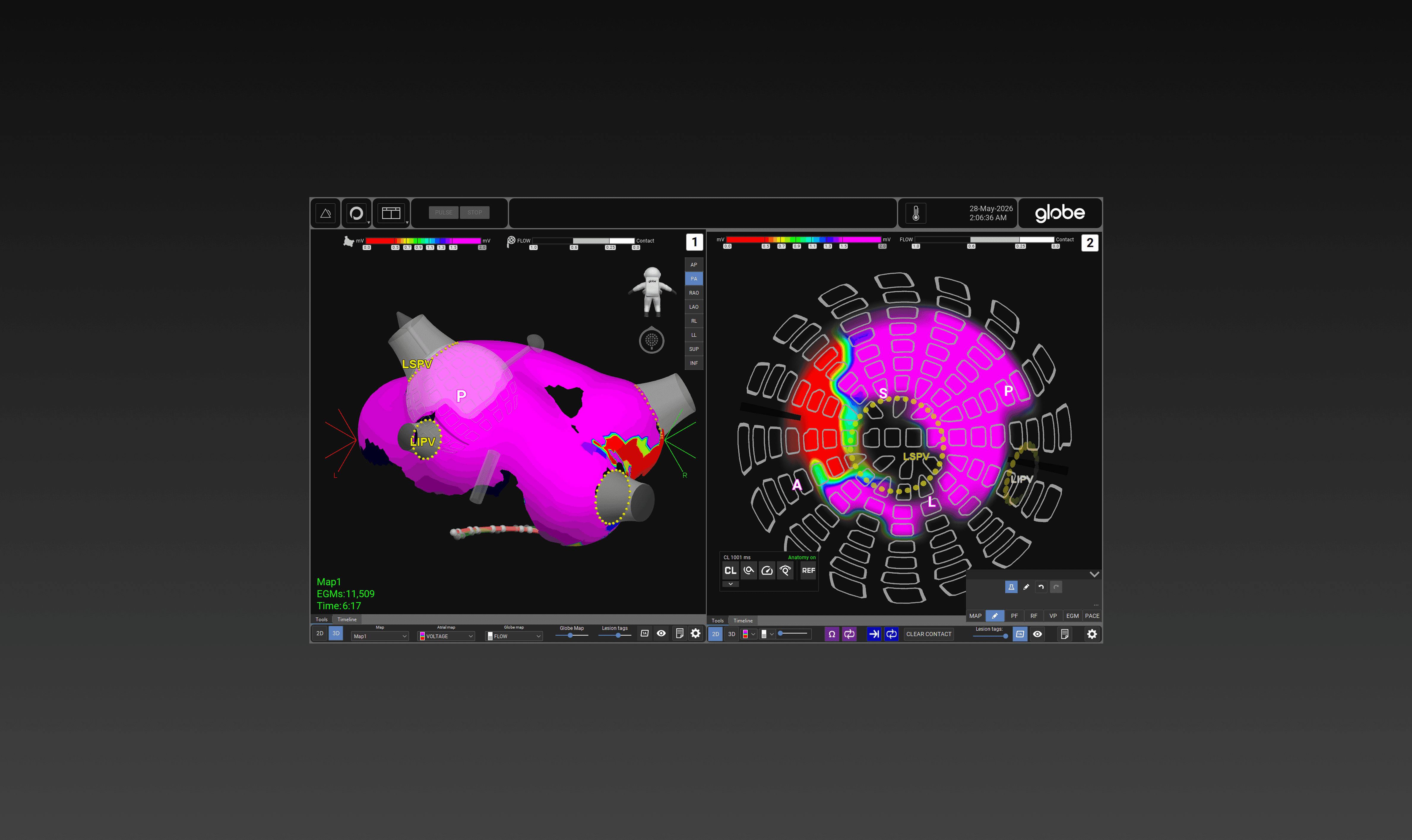
The Globe Pulsed Field System is an advanced platform designed to support the treatment of atrial fibrillation (AFib), helping physicians perform cardiac ablation procedures with greater precision and efficiency.
As a UX/UI Design Intern, I contributed to improving the usability and consistency of the Globe software experience through design audits, design system maintenance, workflow analysis, and cross-functional collaboration. A major focus of my work involved understanding how physicians and software operators interact with the system during live procedures, and using those insights to guide design decisions.
Note: Due to NDA restrictions, this case study highlights my contributions at a high level. Specific features and workflows have been generalized or omitted. Please feel free to contact me to learn further details.
The Challenge
As the Globe software rapidly evolved toward commercial readiness, the pace of development introduced growing inconsistencies between the UX design library and software implementation. Differences in naming conventions, interaction patterns, and UI behaviors made collaboration and iteration more difficult across teams.
At the same time, the software needed to remain intuitive and efficient for clinical users operating in high-pressure environments.
This raised an important question:
“How might we create a scalable and consistent design system that supports rapid development while reducing cognitive load for physicians and software operators?”
Learning the Clinical Workflow
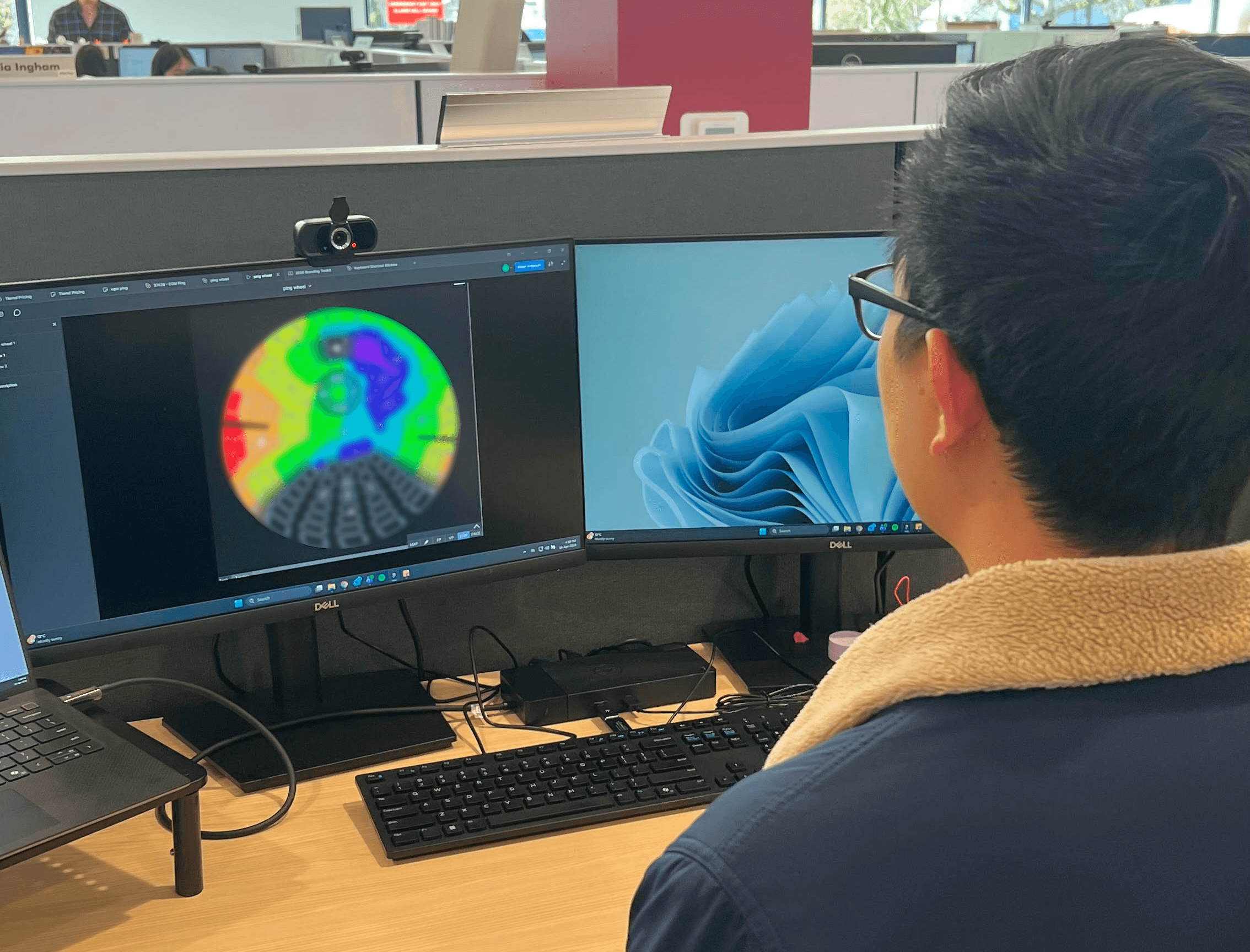
One of the most valuable parts of this experience was learning how differently physicians and software operators interact with the software.
Physicians prioritized quickly interpreting information with minimal visual clutter, while software operators focused on speed, precision, and efficient navigation between workflows. Understanding these perspectives helped shape my approach to UX decisions, especially around consistency, clarity, and reducing unnecessary complexity.
Through usability discussions, workflow reviews, and collaboration with cross-functional teams, I learned how even small interface decisions could impact efficiency and confidence during procedures.
Conducting Design Audits
To better understand the gaps between design and implementation, I conducted design audits across both the Figma design library and software implementations. This involved reviewing components, interaction patterns, visual hierarchy, typography systems, and UI behaviors throughout the product experience.
The audit process helped identify:
Inconsistencies between design specifications and implementation
Repeated UI patterns that could be standardized
Areas where visual complexity could be reduced
Opportunities to improve scalability for future features
I also collaborated closely with UX designers and UI developers through discussions and workflow reviews to better understand how designs were translated into implementation.
Cross-Functional Collaboration
Throughout the internship, I worked closely with UX designers, software developers, and other stakeholders in an iterative feedback-driven environment.
Because medical software involves both technical and clinical considerations, collaboration was essential to balancing:
User needs
Technical constraints
Workflow efficiency
Visual clarity
Future scalability
This experience strengthened my ability to communicate design rationale, receive feedback constructively, and adapt solutions based on real-world constraints.
One piece of feedback that particularly stayed with me was:
“If this feature gets implemented into the system, I would know that I chose to work at the right company.”
Reflection
This experience changed how I think about UX design. I learned that strong UX is not only about creating polished interfaces, but also about understanding user behavior, workflow efficiency, and real-world constraints.
Working within a clinical environment strengthened my ability to:
Design for clarity under pressure
Balance usability with technical complexity
Build scalable systems
Collaborate across teams
Communicate design rationale effectively
Most importantly, it showed me how thoughtful UX decisions can directly support users in high-stakes environments.