Glowmate
UX DESIGN
RESEARCH
Background
As the sole UI/UX Designer, I was responsible for taking Glowmate from an initial concept to a fully clickable high-fidelity prototype.
My responsibilities included:
Conducting user research through surveys and interviews
Designing user flows and wireframes
Creating the visual identity and branding
Building high-fidelity mobile designs
Testing prototypes and iterating based on feedback
Although I worked independently, user feedback played a major role throughout the project. Design decisions were continuously shaped and validated through conversations with real users to ensure the experience felt approachable, community-driven, and helpful.
The Challenge
The skincare space is heavily saturated with products, influencer recommendations, and overwhelming amounts of information. Through early research, I identified several major frustrations users faced:
Product recommendations often felt overly commercialized
Users struggled to find advice from people with similar skin concerns
Most skincare apps focused on products instead of meaningful community interaction
Users wanted skincare experiences that felt personal and trustworthy
This raised an important design question:
“How might we create a skincare platform that prioritizes trust, relatability, and long-term community engagement over product promotion?”
Understanding User Behavior
To better understand skincare habits and frustrations, I conducted surveys with 60 participants and one-on-one interviews with 10 users.
Several key insights emerged:
Users cared more about complete skincare routines than isolated product reviews
Recommendations felt significantly more trustworthy when they came from people with similar skin types
Many users changed their skincare routines seasonally between Summer and Winter
Users disliked apps that felt overly sales-driven or judgmental
One of the most important takeaways was realizing that skincare routines are highly personal and constantly evolving. Rather than designing around static profiles, Glowmate needed to adapt to changing user needs and lifestyles.
Designing a Community-First Experience
Glowmate’s first version focused on balancing social connection with skincare discovery.
Core Features:
Routine sharing for AM and PM skincare routines
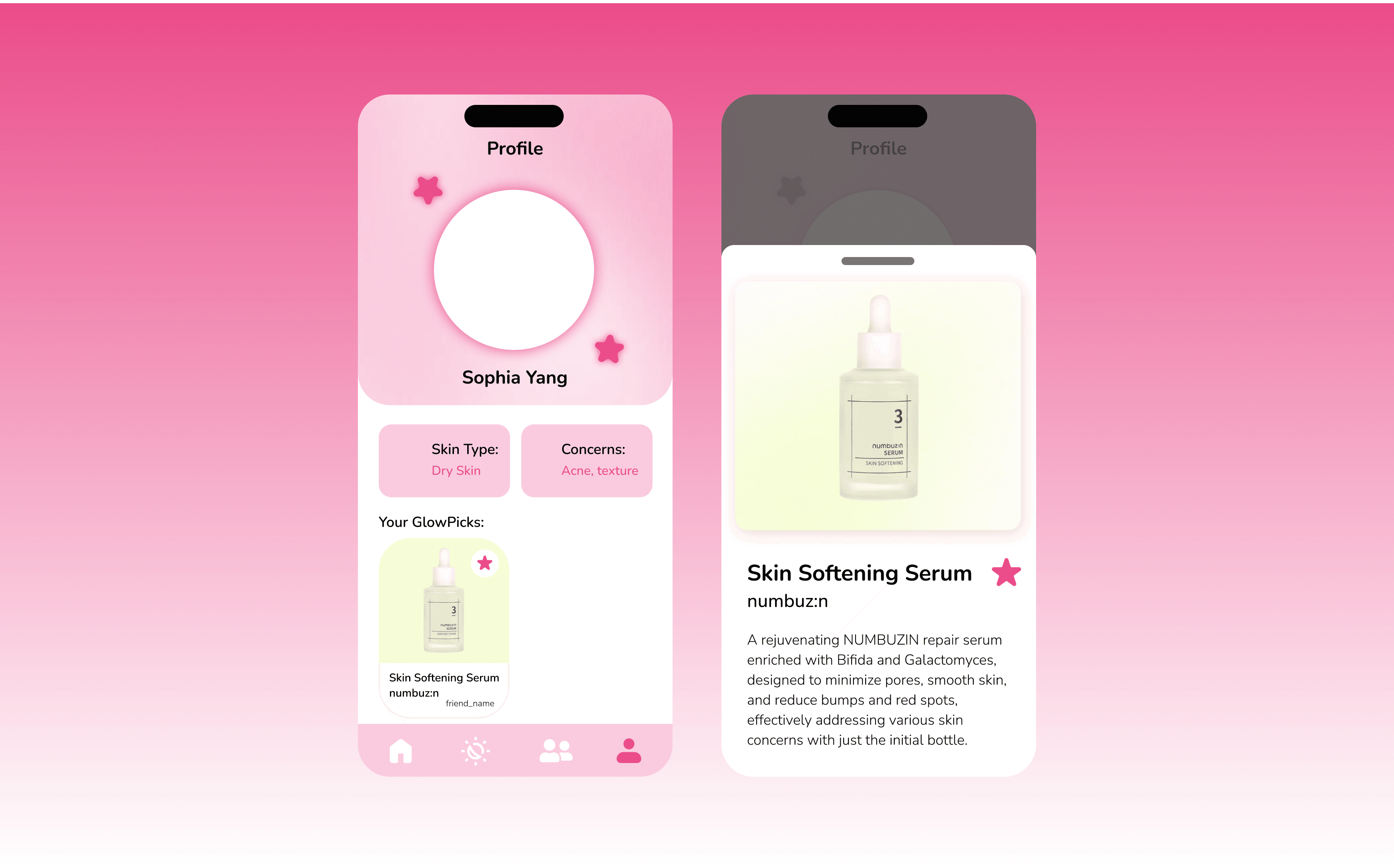
Glowmate matching based on skin type, concerns, and goals
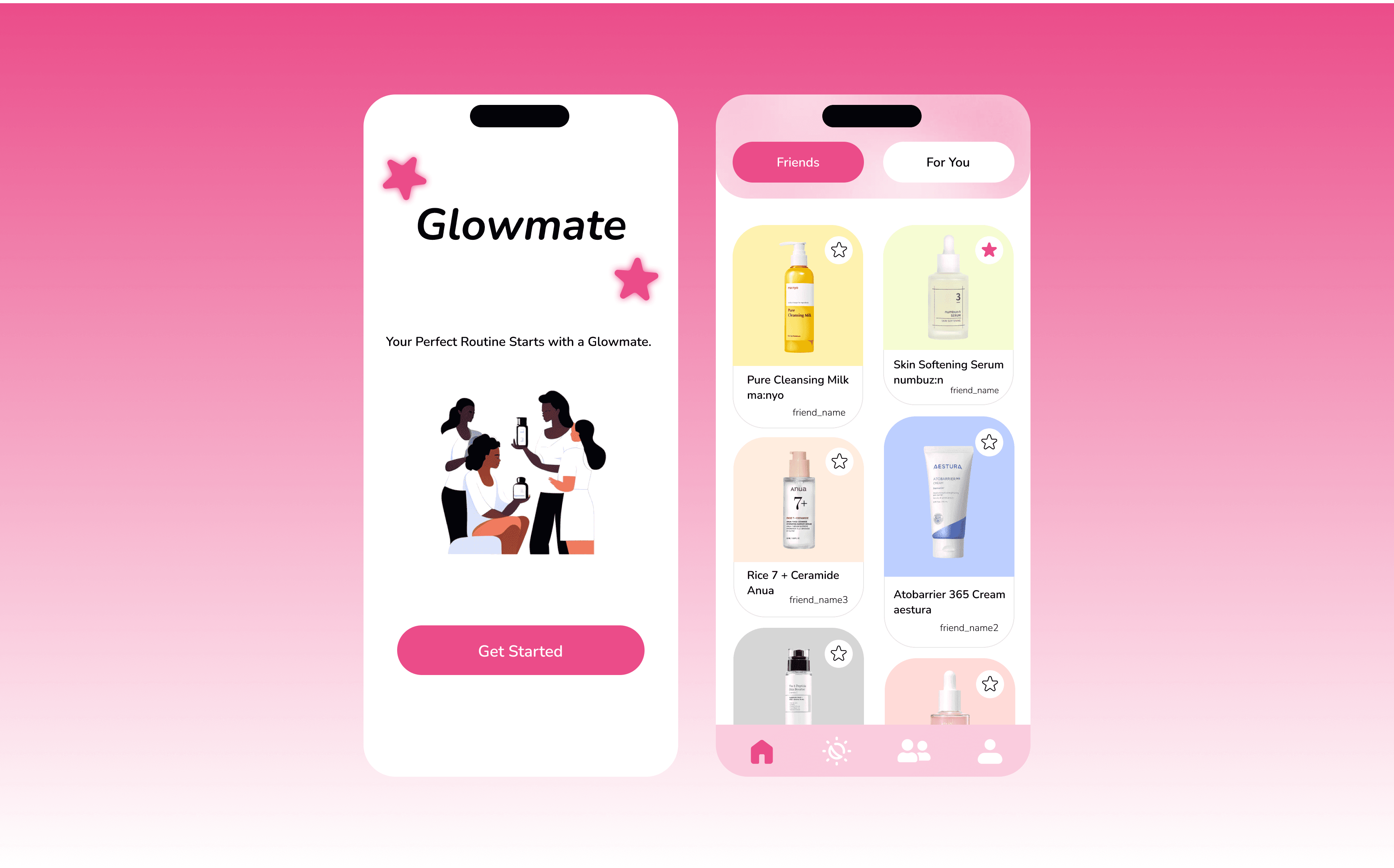
A curated discovery feed built around community recommendations
Friend systems that encouraged long-term interaction and engagement
Key Design Decisions:
Soft pastel colors and rounded UI elements to create a welcoming atmosphere
Card-based layouts for easy browsing and skimmability
Friendly, casual microcopy to make interactions feel supportive
Clean spacing and minimal visual clutter to improve readability
Rather than pushing products aggressively, the experience focused on helping users learn from trusted peers and build genuine community connections.
Seasonal Routines
One of the most impactful research insights was learning how frequently users changed their skincare routines throughout the year.
Users described:
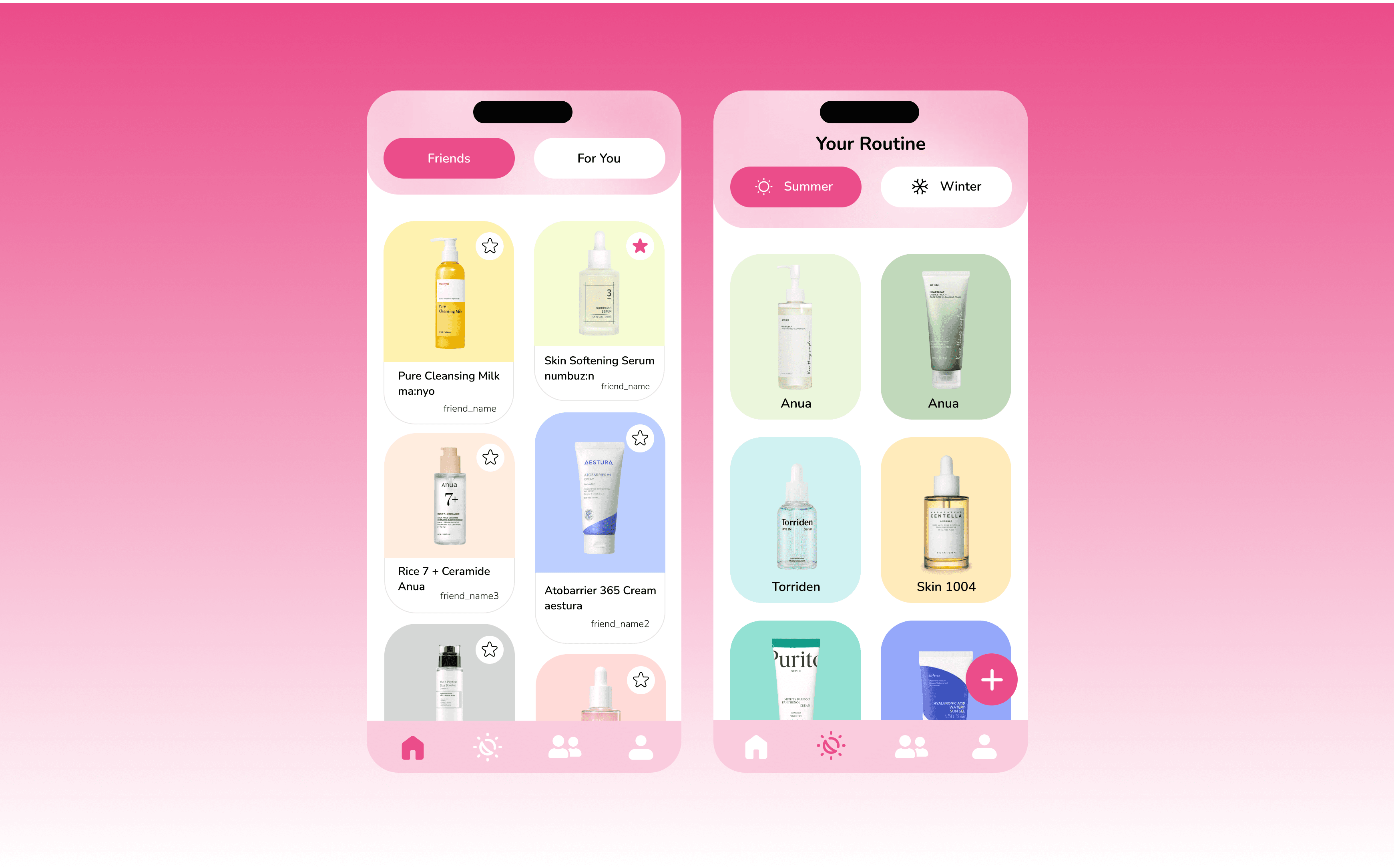
Summer routines focused on hydration and oil control
Winter routines focused on barrier repair and heavier moisturizers
Without accounting for seasonal behavior, Glowmate risked surfacing outdated recommendations and inaccurate user matches.
To solve this, I introduced a seasonal routine system that allowed users to maintain both Summer and Winter skincare routines.
This included:
A toggle system for switching between seasonal routines
Seasonal-aware matching and product recommendations
Gentle reminders encouraging users to review routines as seasons changed
Reflection
Working on Glowmate reinforced the importance of designing for evolving human behavior rather than rigid user flows.
This project strengthened my ability to:
Conduct user-centered research
Translate behavioral insights into product features
Design community-focused experiences
Balance functionality with emotional design
Create systems that support personalization and long-term engagement
Most importantly, Glowmate taught me that thoughtful UX design is not just about solving functional problems — it is about helping users feel understood, supported, and connected.